Western (Qibla) elevation
পশ্চিম (কিবলা) অভিমুখ
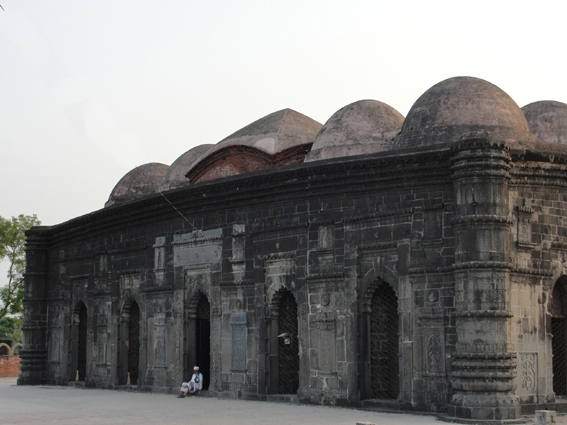
A 25.1 × 15.9 metre rectangle holds three rows of five bays under fifteen domes — the most disciplined display of Sultanate engineering surviving in eastern South Asia. ২৫.১ × ১৫.৯ মিটার আয়তক্ষেত্রে পনেরোটি গম্বুজের নিচে তিন সারি পাঁচ বে — পূর্ব দক্ষিণ এশিয়ায় টিকে থাকা সুলতানি প্রকৌশলের সবচেয়ে সুনিয়ন্ত্রিত নিদর্শন।
The mosque measures 25.1 metres east-west by 15.9 metres north-south — a roughly 1.6 : 1 ratio that gives the prayer hall a longitudinal sweep without sacrificing the perceptual unity of a single room. Inside this rectangle, the architects laid down a 3 × 5 grid of bays. Each of the fifteen cells is roofed by its own dome or vault. মসজিদটি পূর্ব-পশ্চিমে ২৫.১ মিটার ও উত্তর-দক্ষিণে ১৫.৯ মিটার — প্রায় ১.৬ : ১ অনুপাত, যা নামাজঘরকে একটি দীর্ঘতাময় বিস্তার দেয়, অথচ একক কক্ষের অনুভূত ঐক্য নষ্ট করে না। এই আয়তের মধ্যে স্থপতিরা স্থাপন করেছেন ৩ × ৫ বে-গ্রিড। প্রতিটি বে-কে আবৃত করেছে নিজস্ব গম্বুজ বা খিলান।
The 3×5 grid is, structurally, a shallow hypostyle hall — six free-standing stone columns inside the prayer chamber divide the space into nave-and-aisle bays. The columns are slim, octagonal, almost severe; the architects evidently wanted the eye to read the rhythm of vaults above, not the pillars below. ৩×৫ ছকটি কাঠামোগতভাবে একটি অগভীর হাইপোস্টাইল হল — নামাজঘরের ভিতরে ছয়টি স্বাধীন পাথরের স্তম্ভ স্থানটিকে নেভ ও আইসেল-বে-তে বিভক্ত করে। স্তম্ভগুলি সরু, অষ্টভুজাকার, প্রায় তপস্বী; স্থপতিরা স্পষ্টতই চেয়েছিলেন, দর্শক চোখ যেন নিচের স্তম্ভ নয়, উপরের খিলানের ছন্দ পাঠ করে।
Schematic floor plan: outer wall (olive), six interior columns (black), three carved mihrabs (gold), eleven entrances and a 3 × 5 dome grid above. পরিকল্পনাচিত্র: বহিঃপ্রাচীর (অলিভ), ছয়টি অভ্যন্তরীণ স্তম্ভ (কালো), তিনটি মিহরাব (সোনালি), এগারোটি প্রবেশদ্বার ও উপরে ৩ × ৫ গম্বুজ-গ্রিড।
Walls roughly 1.85 metres thick of Bengal's signature small-format thin bricks, set in lime mortar. Bricks were locally fired, abundant and structurally efficient — they bore the weight of the domes. প্রায় ১.৮৫ মিটার পুরু প্রাচীর — বঙ্গের বৈশিষ্ট্যপূর্ণ ছোট ও পাতলা ইট, চুন-পলেস্তরায় গাঁথা। ইট স্থানীয়ভাবে পোড়ানো, প্রচুর এবং কাঠামোগতভাবে দক্ষ — গম্বুজের ভার বহনে তা-ই প্রধান।
A skin of black basalt — quarried at Rajmahal, transported by river — clads the brick on every visible surface. The stone is dressed, polished and carved, transforming a humble brick mass into a luminous architectural object. প্রতিটি দৃশ্যমান পৃষ্ঠে ইটের ওপর কালো বেসাল্ট পাথরের আবরণ — রাজমহলে খনি, নদীপথে পরিবাহিত। পাথর কাটা, পালিশ ও খোদাই করা — এই আবরণ একটি সাধারণ ইট-পিণ্ডকে এক উজ্জ্বল স্থাপত্য-বস্তুতে রূপান্তরিত করে।
Mortar of lime and surkhi (crushed brick) joins both materials. Terracotta accents — moulded plaques in vegetal motifs — fill spandrels and panels where stone gives way to brick. চুন ও সুরকি (ভাঙা ইটের গুঁড়া)-র পলেস্তরা উভয় উপকরণকে যুক্ত করে। যেখানে পাথর শেষ হয়ে ইট শুরু — সেই স্প্যান্ড্রেল ও প্যানেলে পোড়ামাটির অলংকার-ফলক — উদ্ভিদনকশায় ছাঁচে ঢালা।
The fifteen domes are not uniform. The middle row of three bays — the central nave running east-west — is roofed in chau-chala vaults: a four-cornered convex form derived directly from the curvilinear thatched bamboo huts of rural Bengal. The remaining twelve domes, distributed in the flanking aisles, are conventional hemispheres on octagonal squinches. পনেরোটি গম্বুজ অভিন্ন নয়। মধ্যসারির তিনটি বে — পূর্ব-পশ্চিমে চলমান কেন্দ্রীয় নেভ — চৌচালা খিলানে আচ্ছাদিত: একটি চার-কোণা বক্রাকৃতি, যা সরাসরি বঙ্গের গ্রামাঞ্চলের ছাউনিযুক্ত বাঁশের কুটির থেকে গৃহীত। অবশিষ্ট বারোটি গম্বুজ — পার্শ্বের আইসেলে বিন্যস্ত — অষ্টভুজাকার স্কুইন্চের উপর প্রচলিত অর্ধগোলক।
This combination — Persian dome + Bengal hut — is the architectural signature of the Husain Shahi school. At Choto Sona Mosque it reaches its most refined expression: a centralised processional axis, gently emphasised by the slightly higher chau-chala roof, leading the worshipper to the central mihrab. এই মিশ্রণ — পারসিক গম্বুজ + বঙ্গ-কুটির — হুসেন শাহী ঘরানার স্থাপত্য-চিহ্ন। ছোট সোনা মসজিদে এটি তার সর্বোৎকৃষ্ট প্রকাশ লাভ করে: একটি কেন্দ্রিক যাত্রা-অক্ষ, যা সামান্য উঁচু চৌচালা ছাদে বিনয়ে চিহ্নিত — উপাসককে কেন্দ্রীয় মিহরাবের দিকে পরিচালিত করে।
The eastern wall is the public face of the building. Five pointed-arch entrances pierce it — the central one slightly wider and taller, framed by paired stone pilasters and an inscription tablet now lost to weathering. The arches are constructed in the Bengal manner: stone slabs corbelled inward, then finished in lime to give a clean curve. They are not true voussoirs. পূর্ব প্রাচীর ভবনের সাধারণ্যমুখী রূপ। পাঁচটি নির্দেশিত খিলানে দ্বার এতে — কেন্দ্রীয়টি কিঞ্চিৎ প্রশস্ত ও উঁচু, যুগ্ম পাথর-পিলাস্টারে আবদ্ধ এবং একটি শিলালিপি-ফলকে সজ্জিত (যা এখন আবহাওয়ায় বিলীন)। খিলানগুলি বঙ্গীয় রীতিতে নির্মিত: পাথর-ফলক ভেতরের দিকে ঝুঁকিয়ে স্থাপিত, তারপর চুনে মসৃণ বক্ররেখা — প্রকৃত ভাউস্যর নয়।
North and south sides each have three entrances, allowing efficient circulation when crowds gather for jumu'ah (Friday) prayer. The northern wall additionally hides a women's gallery on a raised platform — a feature visible in surveys but no longer used. উত্তর ও দক্ষিণ — প্রতিটিতে তিনটি প্রবেশদ্বার, যা জুমার নামাজের সময় ভিড়ের কার্যকর গমনাগমন নিশ্চিত করে। উত্তরের প্রাচীরে অতিরিক্তভাবে এক উঁচু চত্বরে নারীদের গ্যালারি — জরিপে দৃশ্যমান, যদিও বর্তমানে অব্যবহৃত।
Run your eye along any external wall and you will notice the cornice — the line where the wall meets the roof — does not run straight. It dips. It bends. It climbs in a gentle convex curve from the centre toward the corners, then settles. This is the curvilinear cornice, the single most distinctive feature of Bengal Sultanate architecture. যেকোনো বহিঃপ্রাচীর বরাবর চোখ ফেরালে দেখা যায়, কার্নিস — যেখানে প্রাচীর ও ছাদ মিলিত — সরল রেখায় চলে না। তা নেমে আসে, বঁকে যায়, মৃদু উত্তল বক্ররেখায় কেন্দ্র থেকে কোণের দিকে উঠে গিয়ে স্থির হয়। এটিই বক্ররেখা কার্নিস, বঙ্গ সুলতানি স্থাপত্যের একক সবচেয়ে স্বতন্ত্র বৈশিষ্ট্য।
Why the curve? Because it remembered the bamboo. The do-chala and chau-chala roofs of village Bengal — built of bent bamboo and thatch — naturally sag at their centres. Sultanate masons converted that vernacular sag into a permanent ornamental gesture, carving it into stone and laying it into brick. The result is an architecture that speaks two languages at once: the imported Persian-Islamic and the indigenous Bengali. কেন এই বক্ররেখা? কারণ এটি মনে রেখেছিল বাঁশকে। বাঙালি গ্রামের দো-চালা ও চৌচালা ছাদ — বাঁকানো বাঁশ ও খড়ে তৈরি — স্বাভাবিকভাবেই কেন্দ্রে নুয়ে পড়ে। সুলতানি রাজমিস্ত্রিরা সেই গ্রামীণ নতিকেই রূপান্তরিত করেছেন এক স্থায়ী অলংকার-ভঙ্গিমায় — পাথরে কেটে, ইটে গাঁথা। ফলস্বরূপ এক স্থাপত্য, যা একই সঙ্গে দুটি ভাষায় কথা বলে: আমদানিকৃত পারসিক-ইসলামি ও দেশজ বাংলা।
At Choto Sona Mosque, the cornice is moderately curved — restrained, even minimal compared to the wilder bows of the Adina Mosque or the Sona Masjid of Pandua. It is the curve of a confident master, not a beginner. It frames the building between the discipline of the rectangle below and the joy of fifteen domes above. ছোট সোনা মসজিদে কার্নিস মাঝারিভাবে বক্র — আদিনা মসজিদ বা পাণ্ডুয়ার সোনা মসজিদের প্রবল ধনুর তুলনায় সংযত, এমনকি প্রায় ন্যূনতম। এটি এক আত্মপ্রত্যয়ী গুরুর বক্ররেখা, কোনো নবিশের নয়। এটি ভবনটিকে — নিচের আয়তের শৃঙ্খলা ও উপরের পনেরো গম্বুজের আনন্দের মাঝে — আবদ্ধ করে।