Homeপ্রচ্ছদ · Historyইতিহাস
Chapter III — History & Sultanate Context তৃতীয় অধ্যায় — ইতিহাস ও সুলতানি প্রেক্ষাপট

Bengal,
between two
imperial dawns.
দুই সাম্রাজ্যিক
প্রভাতের মাঝে
বঙ্গদেশ।

When the Choto Sona Mosque was begun in 1493, the Delhi Sultanate had crumbled and the Mughals had not yet arrived. Bengal stood briefly alone, prosperous, and confident — and built like it. ১৪৯৩ সালে যখন ছোট সোনা মসজিদের নির্মাণ শুরু হয়, দিল্লি সুলতানাত খণ্ডবিখণ্ড — মুঘলরা আসেননি তখনো। বঙ্গভূমি অল্পকালের জন্য একাকী, সমৃদ্ধ ও আত্মবিশ্বাসী — এবং তারই প্রতিফলন দেখা যায় এ-নির্মাণে।

Setting প্রেক্ষাপট

A century of Bengal Sultanate brilliance. এক শতাব্দীর বঙ্গ-সুলতানি দীপ্তি।

From the early 14th century to 1576, Bengal was governed by Muslim sultans independent of Delhi. The Bengal Sultanate had a precocious modern character: it minted its own gold coins, traded as far as East Africa and Yunnan, sponsored Bengali poetry alongside Persian, and presided over the conversion of vast rural populations to Islam through the gentle, gradual work of Sufis and itinerant builders. ১৪শ শতাব্দীর গোড়া থেকে ১৫৭৬ পর্যন্ত বঙ্গ ছিল দিল্লি থেকে স্বাধীন মুসলিম সুলতানদের শাসনাধীন। বঙ্গ সুলতানাতের একটি অগ্রণী আধুনিক চরিত্র ছিল: এটি নিজস্ব স্বর্ণমুদ্রা মুদ্রিত করত, পূর্ব আফ্রিকা ও ইউনান পর্যন্ত বাণিজ্য করত, ফারসির পাশাপাশি বাংলা কাব্যের পৃষ্ঠপোষকতা করত এবং সুফি ও ভ্রাম্যমাণ নির্মাতাদের কোমল, ক্রমিক প্রচেষ্টায় বিস্তীর্ণ গ্রামীণ জনতার ইসলামে অবস্থান্তরে নেতৃত্ব দিত।

By the late 15th century, Gaur — the seat of power — had become one of the largest cities in South Asia, with travellers comparing it to the great metropolises of the Islamic world. Into this confidence came the Husain Shahi dynasty in 1493, founded by Sayyid Alauddin Husain Shah, a former chief minister of the previous Hussain Shahi line. ১৫শ শতাব্দীর শেষে রাজধানী গৌড় দক্ষিণ এশিয়ার বৃহত্তম নগরীগুলির অন্যতম হয়ে উঠেছিল — পথিকেরা একে ইসলামি বিশ্বের প্রধান মহানগরীগুলির সঙ্গে তুলনা করতেন। সেই আত্মপ্রত্যয়ের মধ্যে ১৪৯৩ সালে আবির্ভূত হয় হুসেন শাহী রাজবংশ — পূর্বের রাজবংশের প্রাক্তন প্রধানমন্ত্রী সৈয়দ আলাউদ্দিন হুসেন শাহ-এর হাতে প্রতিষ্ঠিত।
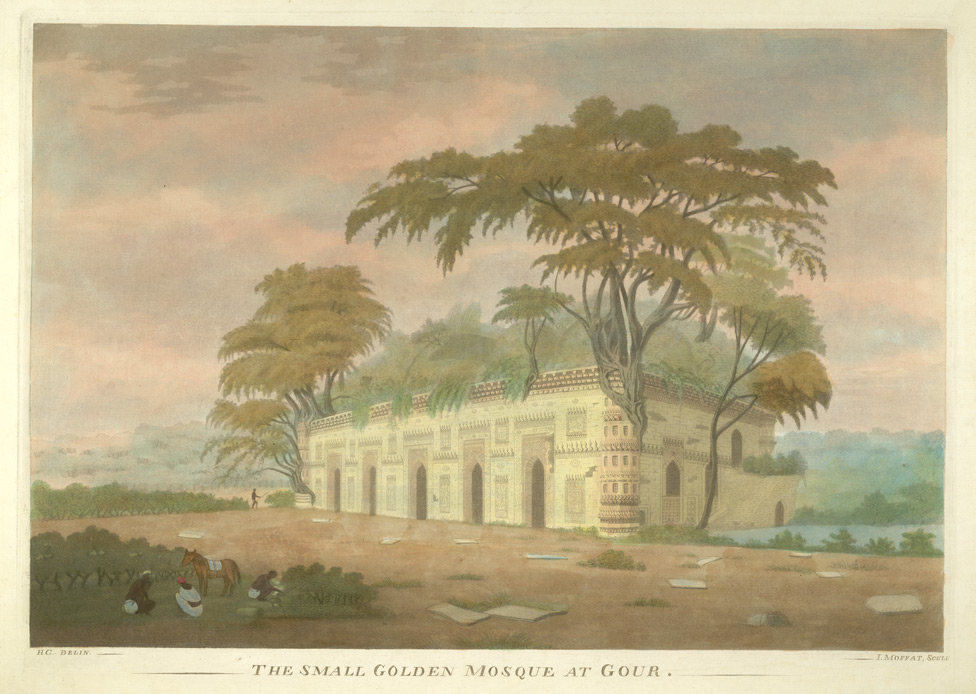
1808 · Engraving ১৮০৮ · এনগ্রেভিং An 1808 engraving of Choto Sona Mosque before restoration
The Patron-Sultan পৃষ্ঠপোষক-সুলতান

Sultan Alauddin Husain Shah, sovereign of a golden age. সুলতান আলাউদ্দিন হুসেন শাহ, এক স্বর্ণযুগের সম্রাট।

His reign (1493–1519) is the cultural high noon of the Bengal Sultanate. He patronised the translation of the Mahabharata into Bengali, built mosques across his realm, expanded the empire eastward into Assam, and established a civic order that earned posthumous nostalgia among both Hindus and Muslims of Bengal — Saint Chaitanya was a contemporary, and there is record of cordial dealings between the two. তাঁর রাজত্বকাল (১৪৯৩–১৫১৯) ছিল বঙ্গ সুলতানাতের সাংস্কৃতিক মধ্যাহ্ন। তিনি মহাভারতের বাংলা অনুবাদের পৃষ্ঠপোষকতা করেন, রাজ্যজুড়ে মসজিদ নির্মাণ করেন, পূর্বদিকে আসামে সাম্রাজ্য বিস্তার করেন এবং এমন এক নাগরিক ব্যবস্থা প্রতিষ্ঠা করেন, যা পরবর্তীকালে বঙ্গের হিন্দু ও মুসলিম উভয়ের মাঝে সুদীর্ঘ স্মৃতিচারণার বিষয় হয়ে ওঠে — সাধক চৈতন্য ছিলেন তাঁর সমকালীন এবং উভয়ের মধ্যে সৌহার্দ্যপূর্ণ সম্পর্কের লিপি পাওয়া যায়।

He commissioned officials, courtiers and merchants to build mosques in his name. Choto Sona Mosque is the most refined of these patronage commissions to survive. তিনি কর্মকর্তা, দরবারি ও বণিকদের তাঁর নামে মসজিদ নির্মাণে নিযুক্ত করেন। সেই পৃষ্ঠপোষকতার মধ্যে টিকে থাকা সর্বাপেক্ষা পরিশীলিত নিদর্শনই ছোট সোনা মসজিদ।

"In the days of Sultan Alauddin Husain Shah, the country was at peace. He gave learning to scholars, lands to Sufis, and stone to builders." "সুলতান আলাউদ্দিন হুসেন শাহের আমলে দেশ ছিল শান্তিতে। তিনি পণ্ডিতদের দিলেন বিদ্যা, সুফিদের দিলেন ভূমি, নির্মাতাদের দিলেন পাথর।"

— Paraphrased Persian chronicle, 17th century — ফারসি বিবরণী, ১৭শ শতাব্দী, ভাবার্থ
Five Centuries — A Timeline পঁাচ শতাব্দীর কালপঞ্জি

From foundation to monument — a chronology in stone. প্রতিষ্ঠা থেকে স্মারক — পাথরে গাঁথা কালপঞ্জি।

1493

Husain Shah ascendsহুসেন শাহের সিংহাসন আরোহণ

Alauddin Husain Shah, son of Sayyid Ashraf, founds the Husain Shahi dynasty in Gaur. The mosque's foundation period begins within his earliest regnal years.সৈয়দ আশরাফের পুত্র আলাউদ্দিন হুসেন শাহ গৌড়ে হুসেন শাহী রাজবংশ প্রতিষ্ঠা করেন। মসজিদের নির্মাণকাল তাঁর প্রাথমিক রাজত্বকালেই শুরু হয়।

c. 1493–1519

Constructionনির্মাণ

Patron Wali Muhammad bin Ali — bearing the Sultanate honorific Majlis Mansur — commissions the mosque in stone-clad brick at Firozpur, near Gaur. The building is gilded with tin and gold leaf.পৃষ্ঠপোষক ওয়ালি মুহাম্মদ বিন আলী — সুলতানি উপাধি "মজলিস মনসুর" ধারণকারী — গৌড়ের নিকটবর্তী ফিরোজপুরে পাথর-আচ্ছাদিত ইট-কাঠামোয় মসজিদ নির্মাণের আদেশ দেন। গম্বুজগুলি টিন ও স্বর্ণপাতে আচ্ছাদিত।

1519

Husain Shah's deathহুসেন শাহের মৃত্যু

The Sultan dies; his successor Nasiruddin Nasrat Shah continues the dynasty until the 1530s when the Mughals first conquer Bengal under Humayun.সুলতানের মৃত্যু; উত্তরসূরি নাসিরুদ্দিন নসরত শাহের অধীনে রাজবংশ ১৫৩০-এর দশক পর্যন্ত টিকে থাকে — তারপর হুমায়ূনের নেতৃত্বে মুঘলদের প্রথম বঙ্গবিজয়।

17th century

Decline of Gaurগৌড়ের পতন

The capital shifts away under Mughal rule. The Ganges silts up and changes course. Gaur is gradually abandoned, its mosques and palaces overtaken by jungle.মুঘল শাসনে রাজধানী স্থানান্তরিত হয়। গঙ্গায় পলি জমে গতিপথ বদলায়। গৌড় ক্রমে পরিত্যক্ত হয় — মসজিদ ও প্রাসাদ ঢাকা পড়ে অরণ্যে।

1808

Antiquarian rediscoveryপুরাতাত্ত্বিক পুনঃআবিষ্কার

Henry Creighton's engravings document the surviving fabric of Gaur, including the Choto Sona Mosque, for European audiences. The mosque's gilding has long since vanished.হেনরি ক্রেইটনের এনগ্রেভিংসমূহ গৌড়ের টিকে থাকা সম্পদ — যার মধ্যে ছোট সোনা মসজিদ রয়েছে — ইউরোপীয় দর্শকদের কাছে নথিবদ্ধ করে। মসজিদের স্বর্ণপাত তখন বহুকাল আগেই অপসৃত।

1897

Great Indian Earthquakeমহাভূমিকম্প, ভারত

The 8.1-magnitude earthquake of 12 June 1897 collapses several domes and damages walls. The mosque's structural integrity is severely compromised.১২ জুন ১৮৯৭-এর ৮.১ মাত্রার ভূমিকম্পে কয়েকটি গম্বুজ ধসে পড়ে এবং প্রাচীর ক্ষতিগ্রস্ত হয়। মসজিদের কাঠামোগত অখণ্ডতা গুরুতরভাবে বিঘ্নিত।

1900–1907

Restoration under the British ASIব্রিটিশ এএসআই-এর তত্ত্বাবধানে পুনঃনির্মাণ

The Archaeological Survey of India undertakes a careful restoration. Several domes are rebuilt; original carved stone is preserved where possible.আর্কিওলজিকাল সার্ভে অফ ইন্ডিয়া যত্নসহকারে পুনঃনির্মাণ করে। কয়েকটি গম্বুজ পুনর্নির্মিত হয়; খোদাই করা মূল পাথর যথাসম্ভব সংরক্ষিত হয়।

1971 →

National monument of Bangladeshবাংলাদেশের জাতীয় স্মারক

Following independence, the Department of Archaeology of Bangladesh assumes custodianship. The mosque remains an active site of worship and a heritage destination.স্বাধীনতার পরে বাংলাদেশের প্রত্নতত্ত্ব অধিদপ্তর তত্ত্বাবধানের দায়িত্ব নেয়। মসজিদটি একইসঙ্গে সক্রিয় উপাসনাস্থল ও ঐতিহ্য-গন্তব্য রয়ে যায়।

The Inscription Tablet শিলালিপি ফলক

A 36-line testament, written in stone. পাথরে লেখা ছত্রিশ পংক্তির এক প্রত্যয়পত্র।

إِنَّمَا يَعْمُرُ مَسَاجِدَ ٱللَّهِ مَنْ ءَامَنَ بِٱللَّهِ وَٱلْيَوْمِ ٱلْءَاخِرِ وَأَقَامَ ٱلصَّلَوٰةَ وَءَاتَى ٱلزَّكَوٰةَ

"The mosques of God shall be visited and maintained by such as believe in God and the Last Day, establish regular prayers, and practise regular charity." "আল্লাহর মসজিদসমূহের রক্ষণাবেক্ষণ কেবল তারাই করে, যারা আল্লাহ ও আখিরাতে বিশ্বাস করে, নামাজ কায়েম করে ও যাকাত প্রদান করে।"

Reading the inscription শিলালিপির পাঠ

An inscribed stone slab — once mounted above the central archway — records the patronage. The text opens with the basmala, recites the Quranic verse from Surah At-Tawbah (9:18), then quotes a Hadith promising paradise to those who build mosques. It names Sultan Alauddin Husain Shah as the reigning monarch, lists his Sultanate titles, and identifies Wali Muhammad bin Ali, son of one Ali, holder of the dignity Majlis Mansur, as the patron. কেন্দ্রীয় খিলানের উপরে একদা স্থাপিত একটি খোদিত পাথর-ফলকে পৃষ্ঠপোষকতার ঘটনাবলি লিপিবদ্ধ। পাঠ্যটি বিসমিল্লাহ দিয়ে শুরু হয়, তারপর সূরা আত-তাওবার (৯:১৮) আয়াত উদ্ধৃত করে, এর পর মসজিদ-নির্মাতাকে জান্নাতের প্রতিশ্রুতি প্রদানকারী একটি হাদিস উদ্ধৃত। এতে শাসক হিসেবে সুলতান আলাউদ্দিন হুসেন শাহের নাম ও সুলতানি উপাধি লিপিবদ্ধ এবং পৃষ্ঠপোষক হিসেবে "মজলিস মনসুর" উপাধিধারী আলির পুত্র ওয়ালি মুহাম্মদ বিন আলী।

The Hadith reads: "Whoever builds a mosque, seeking thereby God's pleasure, God shall build for him a house in paradise." This was the standard pious formula on Husain Shahi mosques — a guarantee of spiritual return for material expenditure. হাদিসটি বলে: "যে ব্যক্তি আল্লাহর সন্তুষ্টি লাভের আশায় মসজিদ নির্মাণ করে, আল্লাহ তার জন্য জান্নাতে একটি গৃহ নির্মাণ করেন।" এটিই হুসেন শাহী মসজিদসমূহের আদর্শ ভক্তিসূচক সূত্র — বস্তুগত ব্যয়ের বদলে আধ্যাত্মিক প্রতিদানের নিশ্চয়তা।

Arabic · ﻋﺮﺑﻲ Persian · ﻓﺎرسی Naskh script
Patron, Title, Authority পৃষ্ঠপোষক, উপাধি, কর্তৃত্ব

Who was Majlis Mansur Wali Muhammad? কে এই মজলিস মনসুর ওয়ালি মুহাম্মদ?

"Majlis" — from the Arabic for "council" — was a high Sultanate title, granted by the sovereign to senior nobles, governors and councillors. The further qualifier "Mansur" — "the victorious," "the divinely aided" — was an honorific reserved for individuals of distinguished service. Together, the titles place Wali Muhammad bin Ali in the upper aristocracy of Husain Shahi Bengal. "মজলিস" — আরবিতে যার অর্থ "পরিষদ" — ছিল একটি উচ্চ সুলতানি উপাধি, যা সম্রাট কর্তৃক প্রদত্ত প্রবীণ সম্ভ্রান্ত, প্রশাসক ও পরামর্শকদের জন্য সংরক্ষিত। আরও বিশেষণ "মনসুর" — "বিজয়ী," "ঐশ্বরিক সাহায্যপ্রাপ্ত" — সম্মানসূচক, যা বিশিষ্ট সেবার স্বীকৃতি। দুই উপাধি একত্রে ওয়ালি মুহাম্মদ বিন আলীকে হুসেন শাহী বঙ্গের ঊর্ধ্বতন অভিজাত শ্রেণীর অন্তর্ভুক্ত প্রতিপন্ন করে।

No detailed biography of him survives. We do not know whether he was a chief minister, a regional governor, or a wealthy merchant ennobled by service. What survives is his act of patronage — and the architecture itself, which testifies to deep pockets, sophisticated taste and access to the royal workshop. তাঁর কোনো বিস্তৃত জীবনচরিত টিকে নেই। আমরা জানি না, তিনি প্রধানমন্ত্রী, আঞ্চলিক প্রশাসক, না কি সেবার মাধ্যমে অভিজাত-পদ লাভকারী ধনাঢ্য বণিক ছিলেন। যা টিকে আছে তা হলো তাঁর পৃষ্ঠপোষকতার ঘটনা — এবং স্থাপত্য নিজে, যা গভীর সম্পদ, পরিশীলিত রুচি ও রাজকীয় কারখানায় প্রবেশাধিকারের সাক্ষ্য দেয়।

In Bengal, the patronage of mosques was not merely a private piety — it was a public statement of legitimacy, a way of inscribing oneself into the imperial narrative. By dedicating a mosque to be visited by future generations, the patron purchased a permanent role in the moral life of his community. বঙ্গে মসজিদের পৃষ্ঠপোষকতা ছিল কেবল ব্যক্তিগত ভক্তি নয় — এটি বৈধতার প্রকাশ্য ঘোষণা, সাম্রাজ্যিক আখ্যানে নিজেকে অঙ্কনের একটি উপায়। ভবিষ্যৎ প্রজন্মের দর্শনীয় মসজিদ প্রতিষ্ঠার মাধ্যমে পৃষ্ঠপোষক তাঁর সম্প্রদায়ের নৈতিক জীবনে এক স্থায়ী আসন ক্রয় করতেন।

Sultanate Titles · Decoded সুলতানি উপাধি · ব্যাখ্যা
  1. Majlis"council member" — high noble or governor."পরিষদ-সদস্য" — উচ্চ অভিজাত বা প্রশাসক।
  2. Mansur"the victorious" — divine-aid honorific."বিজয়ী" — ঐশ্বরিক সাহায্যপ্রাপ্ত উপাধি।
  3. Wali"friend (of God)" — pious epithet."আল্লাহর বন্ধু" — পুণ্যশীল অভিধা।
  4. bin Ali"son of Ali" — patronymic."আলির পুত্র" — পিতৃনাম।
  5. Sultansovereign authority of an Islamic realm.ইসলামি রাজত্বের সার্বভৌম অধিপতি।
Previousপূর্ববর্তী ← About← পরিচয়